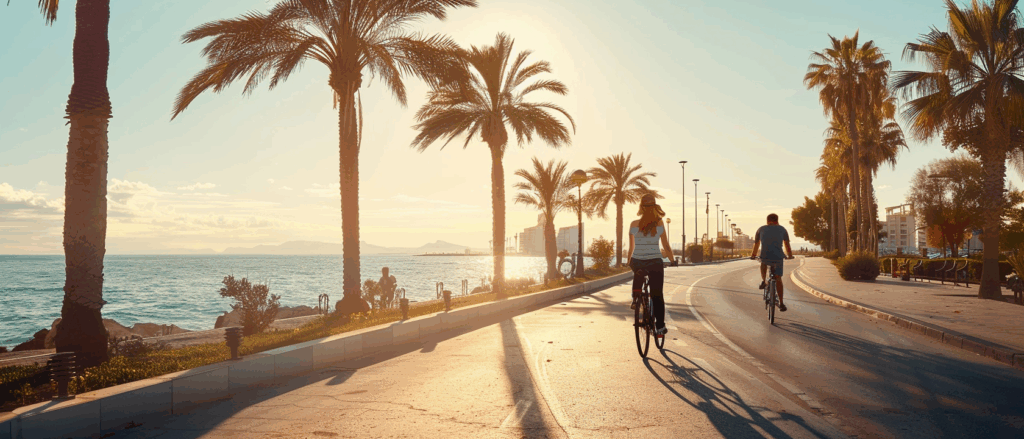
There is something locals know and brochures put badly: the best season for riding on this coast is not summer. It is the long half of the year from October to April. Here are the figures, and what they actually change about a day on a bike.
The figures, and where they come from
These are the standard climate values published by AEMET, Spain's national weather agency, recorded at the official station nearest Torrevieja, the Alicante one. Averages of daily maximum temperatures, month by month:
- October 24.9 °C, November 20.5 °C, December 17.7 °C;
- January 17.0 °C, February 17.6 °C, March 19.6 °C, April 21.3 °C;
- for comparison: July 30.3 °C and August 30.8 °C.
Sunshine follows suit: 217 hours in October, 164 at the December low, 227 in March, 247 in April. And rainfall stays low across the whole period, between 22 and 47 millimetres a month, with the peak in October.
Put plainly: from mid-autumn to spring it is between 17 and 25 degrees in the afternoon, the sun is out and it barely rains. That is precisely the specification for a bike ride.
Why it beats summer
Three reasons, in order of weight.
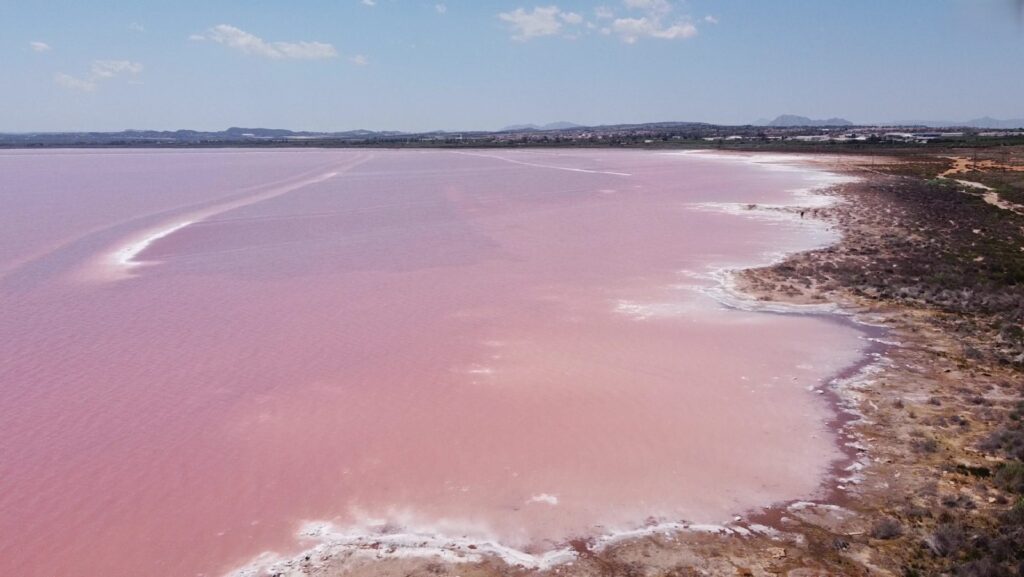
The first is heat. With average maximums above thirty degrees in July and August, a midday ride becomes an ordeal, especially across the salt flats where shade is scarce. In November the same ride is a stroll.
The second is crowds. The Orihuela Costa promenades and the centre of Torrevieja are full in summer, which on a bike means walking pace and frequent stops. Out of season you actually move.
The third is the light. A low winter sky over the lagoons and pine woods looks like nothing else, and it is the time of year when the photographs come out best.
What does change
Wind becomes the real subject. The terrain is no obstacle on this coast, it is all flat, but a headwind turns an easy return into work. The habit is simple: ride out into the wind and come back with it, not the other way round.
The days are short. In December and January a ride started mid-afternoon finishes at dusk. And since 1 October 2026, a cyclist outside built-up areas between sunset and sunrise must wear at least one lit or reflective item visible from 150 metres, one of the points in the new Spanish rules.
Finally, bring one more layer. Average minimums drop to 6 or 7 degrees in January and February, so an early start is chilly even when the afternoon is mild.
Which rides, at this time of year
All of them, which is the whole point. The Vía Verde can be ridden without a thought for the heat, so you can do the whole thing rather than pieces of it. The La Mata lagoons are nicer still, because the lack of shade stops mattering. And the coast from Cabo Roig to Campoamor gets back promenades you can genuinely ride along.
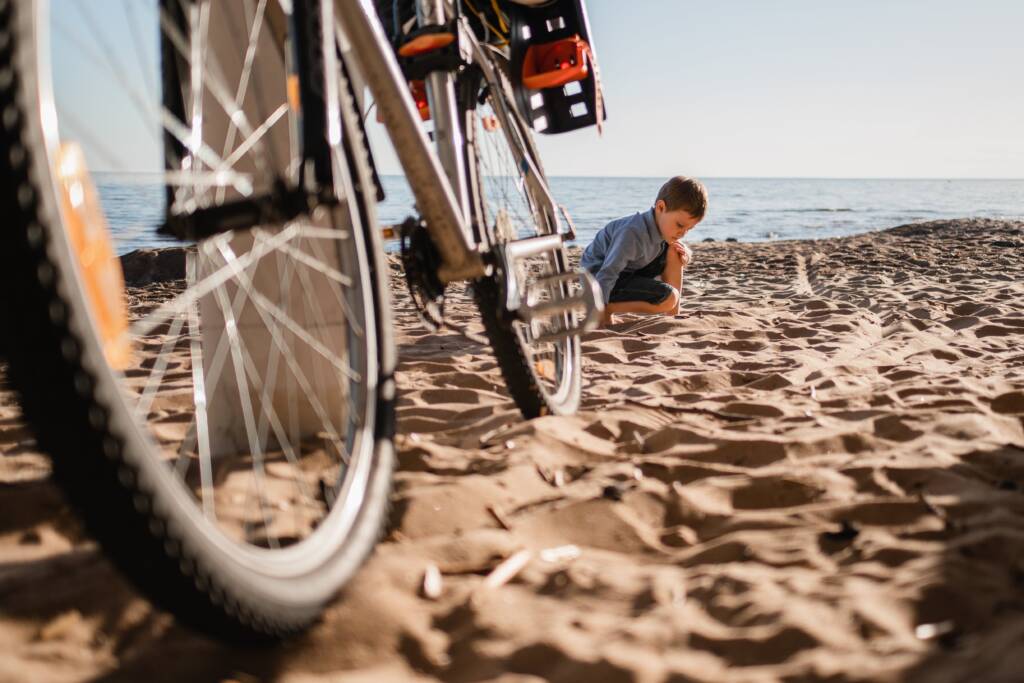
If you are coming as a family, the two car-free rides are easier still out of season: fewer people, less heat, and children who last the distance.
What it means for your rental
A city bike is enough in the large majority of cases; electric assistance earns its place when there is wind or when you are after a full day, and we go into that choice here. Every rental includes the bike, a helmet and a lock, collected in Torrevieja (Playa de los Locos) or Orihuela Costa (Cabo Roig).
Our city bikes, our electric bikes and the frequently asked questions cover the rest.
The figures quoted come from AEMET's standard climate values for Alicante.